Monday, November 17, 2014

The Livewell Q&A: First Ice Edition

I am getting a lot of good feedback on the Livewell Blog (plenty of bad also, but that is mostly from my wife), so if it works, why not keep it rolling. Do you have a fishing-related question you would like answered? Ridiculous or not, send it to me via Twitter: @dropshotbob with the #livewellblog hashtag, or for questions that cannot be contained by 140 characters, by email at niftybob20@gmail.com. I will try to do my best to answer them to the best of my abilities, hopefully you find some information that you can use on the water, as well as a little humor. Also, looking to add a fish of the week photo, so feel free to send me a funny or good fish photos and I will add one or more to the next edition.


I'm looking at getting a new auger. 4-stroke or new lithium laser? Love the idea of the electric, but...

I agree with the hesitancy you show behind electric augers. While there have been some great strides made in the world of lithium ion batteries that make electrics charge faster and drill more holes, at the end of the day, you still need to bring the batteries inside, let them warm up, and then charge them before you can use the auger again. Meanwhile, the 4-stroke auger I have been using for the past several years can sit in the back of my pickup all winter, only needing the occasional top-off at the gas station. Just topped off the tank for the first time this season, cost me a whole 58 cents for non-oxy premium.

I have used plenty of electric augers, and didn't mind using them, but I am the type of guy who can barely remember to charge his flasher batteries in between trips. I have several of them sitting in my “fishing room” just in case. Not sure if I can rationalize keeping one or more spare lithium-ion auger batteries sitting around, especially when they can run upwards of $175 each.

During spring thaw, is it worth jumping ice heaves with your 4-wheeler in order to get to your "tullibee hot spot?"

Absolutely! But first, you need to paint your wheeler so that it looks like the General Lee!!

In all seriousness though, ice heaves can be very dangerous even on foot. If you are on a large enough lake that ice heaves occur often, it is best to stick to the roads that the resorts have laid out. These people spend almost every day dealing with the shifting ice and no one knows it better than them. A road access pass is cheap, hiring a crew to retrieve your wheeler or truck out from under the ice, is not.

I keep a log of all places I've fished. How soon should I go back to a lake that has been 'fished out'? What info should I keep in my log book?

How soon to return to a lake that has been hit hard by fishing pressure is almost entirely dependent on the fertility of the lake. Lakes that have the forage available to grow fish quickly, will recover many times faster than lakes that are relatively infertile. I wrote aboot this a few years ago in two separate articles than can be read here:
History Lessons

and here:
Pine to Prairie Panfish

As far as what records to keep in your own log book, I like to keep it basic. Generally, I will have basic weather info, such as temp, cloud cover, ice and snow thickness (yes, they do matter), and what the weather has been doing. If the weather has been fairly consistent, and there is a big change coming, this can cause a great fish bite. Conversely, after a big change, fishing can tend to be poor for a few days. However, I also believe that you can never have too much information at your fingertips. If you believe you catch more fish while sipping some fancy smoked porter that can only be purchased every third year due to shipping delays from the Himalayan monks that produce it, well then you damn well better put that information in your log book. After all, confidence is 75% of the battle, if you can stay confident out on the ice, you will increase your catch rate.


If your buddy gets all shitfaced while ice fishing, is it ok to give him his own Sorrel boot to puke in on the ride home?

Whose truck are you riding in? Wouldn't it be a lot funnier to let him puke all over the floor of his own truck and leave him wondering why it smells like brats and snowshoe grog the next day? I mean this is payback at its finest. He finally took you out to one of his secret hot spots, forgot to tell you aboot the “bring your own beer” rule, reluctantly gave you one or two Milwaukee's Best, then got so smashed while muttering over and over, “you should have been here least week” that you had to drive him home. No, let him puke on the floor if it his vehicle. Double points if it is his wife or girlfriend's.

Your truck? Hell no, the roads are icy in the winter, and having to dig his Sorel out of the back seat while driving 55 down a two-lane road that is only visible due to the snow mounds on either side is just plain crazy. And, why did he take his boots off anyway? Pull over, kick him into the snowbank to do his retching. Or, if you really want to be mean, hand him his bucket with the two 9” crappies that he was sure were solid one pounders.

You are in charge at this point, and no matter the outcome, you get to hold this over his head the next time he has a “honey hole” and doesn't want to share it.


What temps make how much ice? How does snow cover affect ice making?

This is an interesting question that comes up every year, generally around the time the northern lakes are getting a skim coat on them and every one else is left wondering when it will be their turn. It will also come up around a month after said date, when people start wondering when they can start driving out onto the lakes. There are many charts available on the googles that will show you how much ice is built over a 24hr period if the temperature is such and such. They always deal in averages, which can cause you some great headache if you don't know basic math or have had too much snowshoe grog to drink. Obviously, snow is an insulator, but if it is cold enough, more ice will form. The things you really need to worry aboot are springs, currents, and ice heaves (unless your 4-wheeler is painted like the General Lee, then ICE HEAVES BE DAMNED, LETS ROLL! WHOO!!)

This is the chart I generally refer to:
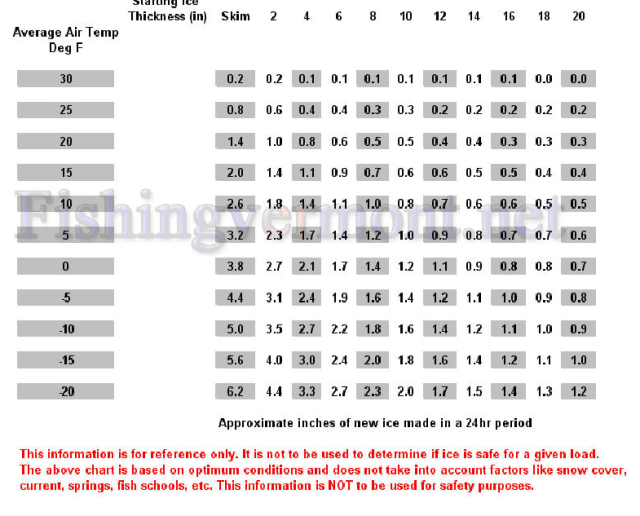
However, no chart will adequately provide the information like someone who has already been out on the lake. This is why baitshops are an invaluable tool, the guys that run them talk to people every day that were out on the ice. Granted fishermen are known liars, but the people at the shops are able to hone their BS skills over the years to give someone who drops in or gives them a phone call good info. Bait shops tend to do better when fisherman catch more fish. So, they have no problem sending you to where the good bite/fishable ice is. Weird, isn't it? Unless you are a dickhead. If you are a dickhead, and I have seen this many times in baitshops, they are more likely to send you over to some kids swimming pool telling you grand stories aboot how everyone is limiting out on 30” walleyes.

Tuesday, October 7, 2014

The Livewell Q&A #3

I have recently been suffering from a bit of writer’s block, so I thought I would throw it to Twitter to see if people had some questions they would like answered. The responses varied greatly from serious/insightful, to downright ludicrous. Luckily this week, the queries were more of the serious nature. I will try to do my best to answer them to the best of my abilities, hopefully you find some information that you can use on the water, as well as a little humor. Do you have a question you would like answered? Ridiculous or not, send it to me via Twitter: @dropshotbob or for questions that cannot be contained by 140 characters, by email at niftybob20@gmail.com

Why can't I find more time for fishing?

I hear some form of this question from people all the time. I wish there was a magical answer, but it all comes back to you. It isn't that you can't find more time to fish, it is that you don't place enough importance on finding time to fish. It is entirely too easy to say to yourself, “I don't have enough time.” If you value your time spent fishing enough, you will always make time to fish.

Granted, you don't need to drop everything and head off on a 4-day trip several times a month. Start slow, keep a fishing rod and a small tackle box in your vehicle and fish during your lunch hour. On your way to, or from work, stop at a small lake or stream and make a few casts. You will begin to find yourself looking forward to your little breaks from the bump and grind that you will start allocating yourself the time to fish. Heck, you may even start planning that fishing trip you have always wanted to go on.
Either way, this is entirely on you. There is no shortage of fishable water in this state, get out and make the most of it.

What do you do when a cell phone falls down the hole?

I can tell you from watching someone else that has done this, what not to do. First, don't ask to borrow someone else's phone to see if you can call it. You just dropped yours down the hole, no one that watched that incident has any faith in your ability not to fumble another, and as we all know, anything dropped in a fish house will immediately find its way down the hole. There is an additional gravitational force around a hole drilled in the ice, that I doubt even Stephen Hawking could explain.


Second, don't demand a ride back to shore “just to check to see if you left it in your car”. It's gone, accept it and move on. Or, in the occasional special case, where your brand new (have had it for less than 36 hours) phone's insurance covers everything except loss, it is time to start formulating a plan to retrieve it.

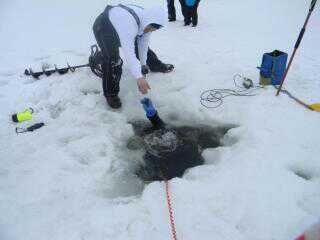
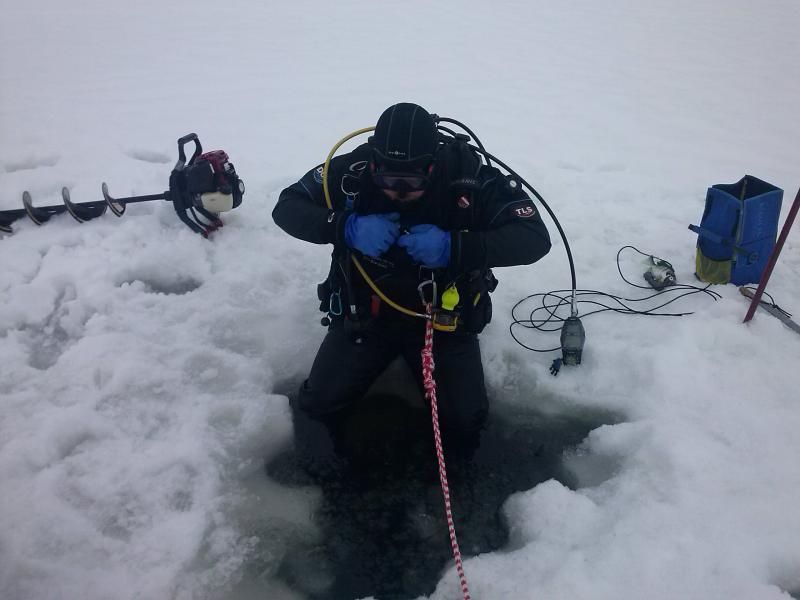
The first step in recovery is to carefully mark the hole the phone went down. Do this with both GPS and something frozen into the hole itself. GPS will get you close, but can often be off by a few feet, and a few feet makes a huge difference when trying to retrieve a cell phone trapped under three feet of ice. Before you go on to deciding how to retrieve your phone, you need to decide how valuable it is to you, if the answer is not very, then by all means go after it with a roof rake with a minnow net duct-taped to the end. However, when this is unsuccessful for over a week of trying, call a professional.

In this specific case, we called in a diver buddy of mine. It took him longer to get his ice diving gear on than it did to recover the phone. Lesson learned for my friend, don't have your cell phone in a hooded sweatshirt front pocket when in a fish house.


How do you keep shiners alive when going tip up fishing?

Don't sneeze! Seriously, bait store shiners have to be the most delicate of all living creatures. I have caught my own shiners out of lakes for use as bait and they will survive a week in a 5 gallon bucket at 80 degrees. Not bait store shiners, however. If a snowflake lands in your minnow bucket and offsets the pH level by even a bit, you will have $30 worth of bait floating belly-up. Same with sneezing, if you walk out of the bait store with an oxygen bag full of shiners and a little old lady walking down the block sneezes, at least half of them will be dead within two minutes.

For me, there is nothing better than sucker minnows for tip-up fishing. Not only do they last longer than it takes to drive from the bait shop to the lake, they also survive multiple hookings. I try not to only stay mobile when I am fishing with an ice rod, but also with my tip-ups. If one flag is not moving, I am constantly changing up my setups. Changing from a quickstrike rig to a light circle hook can make a huge difference, as can rehooking the minnow upside down so that it is constantly trying to right itself.

Suckers come in all shapes and sizes, from little guys (2”) up to spearing decoy size (14”+). All fish will eat a sucker given the chance, so why waste time trying to keep alive some sissy minnows like shiners?

Ice Fishing: live bait or plastics? Bottles or cans?

Interesting questions, especially when paired together. I have long been a proponent of artificial bait when fishing for panfish. Plastics have come a long way in design and chemical makeup in the last 10 years, and more is right around the corner. That being said, it is more about confidence level than anything else. If you have confidence that you will catch more fish with either plastics or live bait, you will. A presentation you have confidence in will always outperform anything else, due to the fact that you will spend more time with it.

So for the every day angler that is still struggling with the idea of using plastics instead of live bait, why not try bolstering your confidence in plastics by, gasp!, using them both at the same time? A jig tipped with a plastic then topped off with a waxworm or eurolarvae will satisfy your need to use live bait as well as teach you how great plastics actually are for ice fishing.


As for the beer question, always cans. Glass bottles can break too easily when thrown in the tub of the fish house. Also, in the rare instance your beer has become warm, aluminum cans float in the ice hole, while glass bottles sink to the bottom. Save the micro-brews for the fish fry after you are done. No one in a fish house has ever turned down High-Life in a can.

Friday, June 27, 2014

City Limits Deer Hunting

City Limits Deer Hunting
Bob Bohland


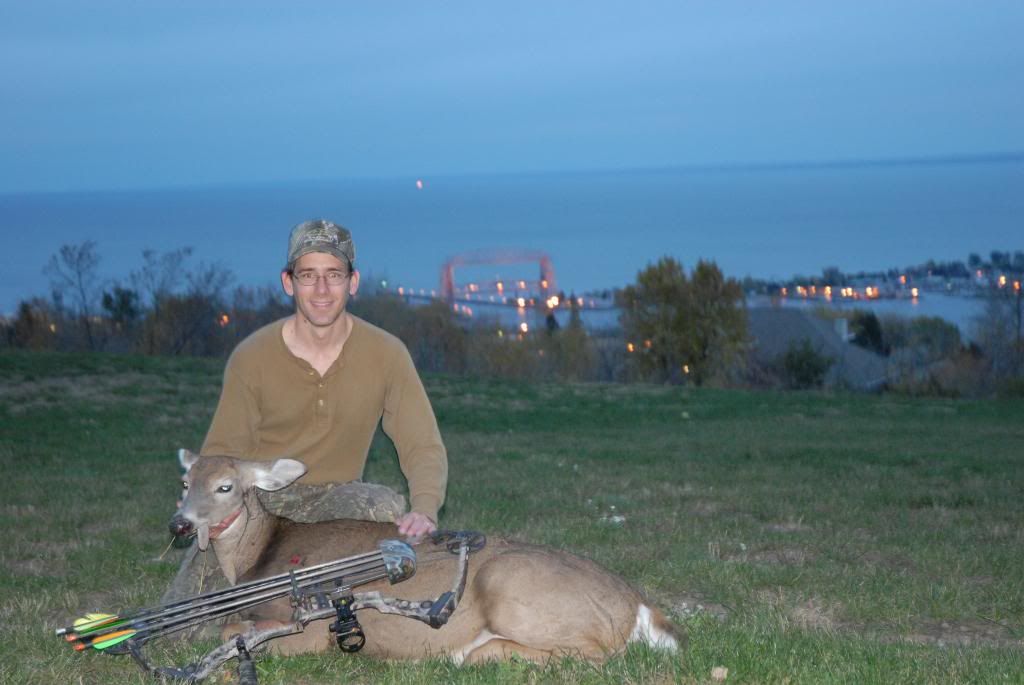
It is no secret that many metropolitan areas hold large amounts of deer. To the average homeowner, they can be a huge problem. They eat a lot of decorative plants and love to spend time in the middle of roads. We have all seen them in our neighborhoods, and wish we could pull the trigger on them. Well, let me tell you a secret, if you are a bowhunter, you can take a crack at some of these deer, and there are some monsters in the metro!

The privilege to hunt in populated areas can change from year to year, and often requires a lot of research and applications. Don’t let this discourage you though; a simple Google search with the words “archery hunt” and whatever locale you are interested in will bring you a wealth of information. Many of these hunts are also published in local newspapers and some are even listed in the Minnesota DNR Hunting Regulations. Keep in mind that many of these hunts are limited to a very few hunters, however you can gain preference points if you are unsuccessful at first; So don’t be disappointed if you are unable to secure a permit in your first year of applying.

If you live in the Twin Cities area, one great group to look into is the Metro Bowhunters’ Resource Base (MBRB). The MBRB is a volunteer organization that teams with cities and park departments to help reduce the size of an urban deer herd in a cost-effective manner. So, instead of bringing in an expensive company that will thin out animal population, they bring in people that are willing to pay for the ability to hunt in, essentially, their own backyards. The MBRB was formed in 1995 by several leading Minnesota Archery organizations. Their mission statement read:, “The MBRB's purpose is to demonstrate archery's effectiveness as a deer management tool and to convey a positive image of bowhunting while providing additional bowhunting opportunities to urban bowhunters." They are an entirely volunteer organization and they encourage hunters to help out wherever they can.

In the Duluth area, the hunts are administered by the Arrowhead Bowhunters Alliance (ABA). The ABA is an all-volunteer organization consisting of around 8-10 board members. Their hunt covers around 30,000 acres, and they generally have around 300-400 hunters. Their hunters are placed in much larger zones than other metro hunting organizations and are encouraged to work with private landowners in their drawn zones to help thin out more of the herd. They even instituted their own “Hunting Hotspot” program. According to the ABA, “These are highly controlled hunts focused on harvesting the maximum number of antlerless deer possible in the shortest period of time while maintaining minimum impact on a the area / neighborhood being hunted.” This program is only available for hunters returning to the ABA, and the group has final say on if a hunter can be allowed to participate. The Hot Spot hunts are extremely limited in spaces, and less than 20 or 30 of the 380+ hunters will EVER get placed into a Hot Spot. However, even without getting into one of the Hot Spot zones, the Duluth area boasts one of the highest success rates for metro bowhunts at around 1.98 deer per hunter each season.

The ABA is one of the first to institute a numbered arrow system. Each hunter in the program is required to “write their Hunter ID number on all arrows they have in their possession while in the field” They list several reasons for this practice, which started at the beginning of the 2013 season:
1. To reduce the amount of time the ABA officials spend during the hunting season investigating
incidents involving lost deer and/or arrows
2. To quickly and efficiently aid in the recovery of deer to maximize the chance the animal can be salvaged
3. To quickly and efficiently aid in connecting lost deer with the hunter who shot it
4. To help assure the City Officials that an ABA hunter isn’t responsible when poached deer are
found, and
5. To help reconnect lost arrows with their rightful owners.

Many locations require a proficiency test for archers looking to join a hunt, while some require nothing more than an application (generally, the more outstate locations do not require you pass a test). A standard requirement includes completion of the Minnesota DNR’s Bowhunting Safety Class and a shooting test. This test can be done at many archery shops, but your hunt may require they be done at certain locations. Some of the more restricted hunts even include a secondary shooting test in front of their judges with broadheads and your hunting clothing on. A standard proficiency test (from the MBRB website) is: Standard qualification: 5 of 7 arrows at an 8" circle at 20 yards. Sharpshooter qualification: 6 of 7 arrows at a 4" circle at 20 yards. Yet other locations require nothing more than a successful application.

In a time of urban sprawl and housing developments continuing their march across the landscape, we often hear of the damage deer will do to not only homeowners gardens, but also the damage they inflict in the all too common traffic accidents. Groups like the MBRB and the ABA offer a no-cost alterrnative to cities to reduce their deer herds. A city in Rhode Island last year spent over $128,000 to bring in sharpshooters to control the deer population, and it is estimated they will need to continue this over the next 4 years to even get a handle on their burgeoning population of whitetail. Other municipalities are trying a version of deer birth control, but this can cost from $300-1000 per animal. These cities do not realize that there are groups of people that are more than willing to pay for the opportunity to safely remove and consume the deer that quickly become a problem for most suburbanites.

For more information on city hunts near you, please visit: mbrb.org, bowhuntersalliance.org, or check with your local city adminstrator.

Saturday, May 31, 2014

The Livewell Q&A #2

I have recently been suffering from a bit of writer’s block, so I thought I would throw it to Twitter to see if people had some questions they would like answered. The responses varied greatly from serious/insightful, to downright ludicrous. Luckily this week, the queries were more of the serious nature. I will try to do my best to answer them to the best of my abilities, hopefully you find some information that you can use on the water, as well as a little humor. Do you have a question you would like answered? Ridiculous or not, send it to me via Twitter: @dropshotbob or for questions that cannot be contained by 140 characters, by email at niftybob20@gmail.com


What's the best way to learn how to use a baitcaster reel?
If you are new to using a baitcaster, now is definitely the time to do so. Unlike back when I was younger, the technology available in these reels is absurd. Back in the day when I was young (it wasn’t THAT long ago), I was struck by how many of the pro fisherman were using baitcasters. As a simple Minnesota kid who grew up fishing panfish, with bass as a fun afterthought, I somehow knew that if I got myself a baitcaster setup I could catch the same sized fish as the guys I saw on the Bassmaster trail on TV. When you are young and don’t know any better, you don’t realize that the reels you can afford are a far shout from what the pros are using.

Anyways, I am 14 and finally saved up from mowing lawns around the neighborhood to take my bike the two mile ride to, what I think was a Kmart at the time, to purchase a $26 baitcasting combo made by Shakespeare. Now what I am going to say here is not a knock at the company that made this setup, but an example of how far the technology has come. This reel was the most horseshit thing I have ever used in my life. You could say, that it might have been just a newbie trying a baitcaster for the first time, but you would be wrong. I still have this reel, and it is still a colossal piece of carp.

Flash forward not even two decades and one of the cheapest offerings from Shimano offers: “With 6.5:1 gear Ratio this reel is designed to fish many different style lures from Worms, Jigs, Spinnerbaits, and fast moving Crankbaits. For fishing those baits Caenan is packed with 6 shielded stainless steel ball bearings for smooth fishing. Casting this reel is amazing with its VBS braking system and comes with Shimano’s Lo-Mass Spool for easy start up inertia making casting even the lightest baits easy.” I don’t think the most high-end offerings back when I bought my first baitcaster had half of these features.

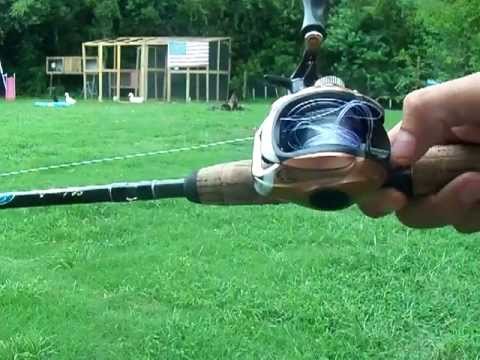
Back to the original question, first find a baitcaster reel or combo in your price range, then it is all about practice. The first step with a baitcaster is setting the tension knob. When you are starting out, this should be tightened to the point that whatever you have on your line is barely falling down when you hold the rod up and press the casting lever. The anti-backlash magnet, if it is on the reel, should be set at its maximum. Then practice your casting in your yard. Yes, it seems weird, but you will get over the fact that your neighbors think you are weird in a few days. Decrease the anti-backlash as you gain confidence with the reel, and then the tension knob.

Now that you have it on the water, there are two very important things to know when fishing with someone else or around other boats. The first is how to pick out a backlash, which can be found by searching Youtube for videos like this: Backlash The second trick, is six simple words that you need to memorize. No matter how long have you used baitcasters, you will end up backlashing them at the most inopportune times, be it excitement or carelessness, just be ready with the quip, “First day with the new reel.”


I just like to bobber fish. What's the best way to catch fish on a bobber?
Wow, this is the most vague question of all. This is the fishing question equivalent of, “What is the best way to cook a steak?” The proper way for me to answer this question is, it all depends. Granted you will get that with a lot of questions you ask involving fishing. This is mostly due to fisherman being very knowledgeable about a certain species and has nothing to do with that fact that we pull a lot of this stuff out of our ass as we go.

Well, since I put this question out there as a panfisherman myself, I will answer it for panfish. It all depends… In all seriousness, I wrote an article about this a few years ago that can be read here: Panfish Bobber Basics While it may seem when you walk down the fishing aisle at your local sporting goods retailer, that there are entirely too many options available, I guarantee you that they all have a specific use.

Not trying to be too vague I will sum it up with, you need to have 3 different bobber types for panfish. 1. A round foam float. Weighted or un-weighted is entirely up to you. Weighted floats cast further, un-weighted are more sensitive. What isn’t up for debate is that when you are fishing shallow aggressive fish, the popping sound these floats make will draw fish in from a distance. 2. Slip bobbers. This can range from a Thill center float, to your standard slip bobber dependent on what your plans with the float may be. These work great as they allow you to fish shallow to as deep as you could want. 3. A Static position bobber. This is summed up as a bobber that is pegged to one position. While one of the round foam floats would meet this definition, I like to think of this category as the stealth bobber. A Thill shy-bite or one of the slip bobbers with the spring at the bottom are great for this. They excel in shallow, clear water as they do not spook fish are very sensitive to bites.

Bobbers are a great way to suspend a bait in front of fish without sitting over the top of them and risk spooking them with the shadow of your boat. I use them often as there is no end to the tinkering you can do with a bobber setup, plus there is nothing better than watching one slowly disappear beneath the waves.

How do you usually fish the Lindy Watsit jig for ‘gills? Vertical jigging, under a bobber, or tight lining?
Bluegills are at the same time the easiest fish in the world to catch, and the most finicky. The Watsit grub evens up the score for fisherman. The times they are downright suicidal and are willing to hit anything in the water (including the moles on my back when swimming) anything you put out will work, however, when they get picky (which can happen at almost a moment’s notice) the Watsit grub really shines.

Generally, I fish the Watsit as a slow-fall bait. I pair it with a jighead that will allow the fall rate I want depending on how shallow I am fishing it. A 1/64, 1/32, or 1/16 ounce jig matched with one will offer drastically different fall rates. But the plethora of ways this bait can be fished opens up a whole new level of opportunities. For sunfish, I tend to cast more than anything else with the Watsit. While this technique works great, when the fish shut down a little, I will also try variations such as floating them under a bobber for shallow fish or drop-shotting them in deeper water. When the sunfish are deeper, dropshotting can be deadly for the big bluegills, though many other species of sunfish (specifically green sunfish and pumpkinseeds) tend to stay shallow in the weeds throughout the open water period.

Since I am without a boat right now, where are some of the best public access fishing spots in central Mn?
Being somewhat new to the Central Minnesota area, I was at first disheartened by the lack of shore fishing spots. My brother went to SCSU and often complained of the lack of fishing opportunities in the area. I soon learned that there was a ton of locations in the area I could hit without having to bring the boat. What my brother did not understand, is that most (not all) of the shore fishing spots in the area are river-based. Your species preference may have to change if you only want to fish from shore, but there are a lot of fish that are more than willing to put a bend in your fishing rod if you aren’t picky.

Without a doubt, one of the best areas to hit is the entire Sauk River Chain, this includes the entire Horseshoe Chain of lakes. While it may seem as though much of the area is locked up by private owners, one just has to drive down any of the county roads in the area to see that there are plenty of areas available for anglers. Whether it be road right-of-ways, or a plot of public land adjacent to part of the waterway, there is always a willing catfish, walleye, or other fish ready to put on a good fight.

Coming in a close second is the Mississippi River. There is no shortage of places to toss out a line along its banks. That being said, I would concentrate on the dams in the area, which are plentiful. Beneath the University Dam and the Sartell Dam, there are no shortage of species of fish to catch. The only inhibitor is the flow of the current, the higher the flow, the less likely you are to catch fish.

Preferred/best line? For panfish, walleyes, northerns? Trolling v jigging or casting?
In the modern day and age, there are a multitude of line options available. For me, however, there are two line options I use: Superlines and Copolymers. Superlines are what I have rigged up for bass, northerns, and muskies. Copolymers are for everything else. Trolling vs jigging it doesnt matter to me, it is all species dependent.

Trolling and casting for bass and muskies, I like to use 85 pound braid, while for bass, I will only use 50. Panfish, I use 4 pound copoly year round. Walleye, well who cares, walleyes are worthless bottom feeders that dont fight.


What are some good artificial lures/baits for targeting panfish during spring and summer?
For openwater panfish, there are two types of artificials I like to use: plastics and crankbaits. Plastics are for when I need to slow my presentation down and crankbaits are for when I am searching for fish.
There are so many plastics available on the market now that it can be a bit of a task in itself just trying to pick out a few to try. However, if you focus on two aspects of panfish plastics It can make your search a little easier, these are color and size. As far as color goes, I tend towards bright colors when I am fishing in dark water or plan to fish at dawn or dusk. Natural colors are for clear water and when it is bright out. Size is dependent on a few different things. One, is what kind of panfish do you plan to target. Obviously crappies have larger mouths than sunfish, and green sunfish have larger mouths than bluegills, so you want your offering to match. The other way to narrow your choice down is time of year. Fish are much less likely to bite a larger offering early in the year due to their metabolisms being slower. My favorite is the Lindy Watsit grub because I can get sizes from 2.5” and smaller and they have colors that can match almost any forage.

Crankbaits also come in a variety of shapes and sizes, but luckily, there aren't a million for panfish. I group these into 3 different categories. 1. Topwaters, these are scaled down versions of bass topwaters that are deadly on sunfish throughout the open water period. 2. Peanut baits, likewise, these are scaled down versions of bass crankbaits and are great for searching slightly deeper water (4-10ft) for panfish. 3. Stickbaits, these are also miniature versions of the larger stickbaits that walleye and smallmouth fisherman use. They are good for covering a lot of shallow water over the tops of emerging weeds (1-5ft). Rebel Lure company and Bomber make a ton of offerings in all three of these categories.


Do you ever troll for panfish? I've heard it can be effective, but never have tried it
Trolling for panfish can be very effective, especially when the fish are spread out. This technique allows you to cover a lot of water with both your bait and your sonar. If you keep marking fish, but cannot get them to commit, change up what you are trolling with.
When they are aggressive, crankbaits work very well, but plastics and lindy rigs are also very effective. I like to slow troll plastics over suspended fish and will use the spinner for fish that are hugging the bottom. Let the fish tell you what they want.


Thanks for the questions everyone, keep 'em coming. Hope to make this a weekly/biweekly thing, but I need your questions to keep it going. I will draw questions from a hat for this week's prize and the winner will be notified via DM on Twitter.

Monday, May 12, 2014

The Livewell Q&A #1

           I have recently been suffering from a bit of writer’s block, so I thought I would throw it to Twitter to see if people had some questions they would like answered. The responses varied greatly from serious/insightful, to downright ludicrous. I will try to do my best to answer them to the best of my abilities, hopefully you find some information that you can use on the water, as well as a little humor. Do you have a question you would like answered? Ridiculous or not, send it to me via Twitter: @dropshotbob

From Aaron: Best/favorite emerging weeds for early season panfish?
            As the ice leaves the lakes there are varying stages of weeds that fish will prefer. Some of this has to do with time of their emergence and some has to do with the location of the aquatic vegetation. Right after ice out, almost any green weeds you find will have fish near them. Two of my all-time favorites are Coontail and Curly-Leaf Pondweed, because of how quickly they green up in the spring, often when there is still ice on the lake. Curly-leaf pondweed is an invasive species, however it has been around so long, few people realize it anymore.
            Later in the spring, panfish will begin to hang around areas that have lilypads starting to bud up from the bottom, but this is more due to that fact that lilypads grow in dark-bottomed areas that will warm up faster than the rest of the lake. During the spawn, crappies will hang around in hard-stemmed bulrush provided it is at the correct depth.
 Curly Leaf Pondweed

From Blues and Baseball: Gummy worms vs real worms, thoughts?
            Umm? Ok, I will bite. I have never been a huge fan of nightcrawlers as bait. Too messy, their guts get everywhere, and while I will use them if I need to, it isn’t very often that you can’t catch panfish with artificials. While I am sure I have tried gummy worms or those haribo bears at some point in time (I like to tinker), have you ever had a wet one in your hands? One drop of water and they turn into something so slimy an eelpout would be proud.
            When I was younger, I begged my parents for one of those Creepy Crawler kits for years until they finally caved one year at Christmas. While most little boys wanted to make things to freak out their sisters or kids at school, I was busy trying different colors and shapes to make fish bite. Wish I could find another one of those machines today and change the molds so I could pour some new plastics for the tackle box. Side note: sadly they never got me my own Easy-Bake Oven, so I had to settle for sharing my sister’s.


From Aaron: Preferred jig and bait combo for early season panfish? Or just trying to match the insects/baitfish?
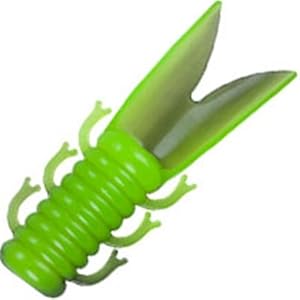
            Bait? We don’t need no stinkin’ bait! Truth be told, I can’t remember the last time I purchased bait for panfish. If you are on spring panfish, you shouldn’t need anything more than a handful of different bobber styles (more on that in a moment), some assorted jigs (hair and plain), and some plastics. There are a variety of plastics available on the market today. My personal favorite is the Lindy Watsit Grub, aptly named because no one really knows what it is supposed to look like. While it looks like something that would come out of someone’s Creepy Crawler set after a half dozen beers, these plastics are just plain crappie suicide! Jig size is generally dependent on how deep you are fishing, but I rarely use larger than a 1/32nd ounce in the spring time.
            As for bobbers, there are a few styles you are going to want to have with you on the water. One of the most versatile is your average round foam float. These are available in both weighted and unweighted. I like these for when the fish are shallow and aggressive. Cast it out, and pop it back to the boat. The gurgling and popping sound the bobber makes dragging through the water, calls attention to your bait for fish that are roaming. When fish are little more skittish, I like to use a very thin pencil style bobber with a spring. This bobber won’t call attention to your offering, but it won’t spook fish that are in shallow, clear water. The third option is a slip bobber. I go to this option when after cold front when panfish push back out to that first break due to fronts coming through in the spring. My favorite is the Wobble Bobber, as every little ripple in the water makes your bait dance around.


From E. Rolf:  What's the best way to jig? Does the movement even matter that much? Or is it all about the bait?
            The best way to jig is whatever way made a fish bite last. This may sound really obscure, but it is true. Change your jigging motion often when you aren’t getting bites and remember what you were doing before you got bit. The movement of your bait does matter a lot, but only if you can duplicate it. Save the bait for roughfish like walleyes.
            Serious question for you: Do you know what your bait is doing down there? I like to put every jig/plastic combo I plan to use through my “testing tank”, which is a fancy way of saying an old cheese ball container full of water that I keep in my basement. Make sure to keep the lid on when not in use though as dogs seem to enjoy finding a way to knock it over otherwise.


From Clarence: What is your number one secret for catching cold-water slab papermouths?
            There are two things I do every spring to target big fish. The first is to upsize. Big fish want big meals, have you ever seen how big the mouth of a 12” crappie is? While I keep my jig head size small in the spring, I have no problem attaching a 2” plastic to it to target only big fish. Likewise, you needn’t only use jigs for spring panfish. Crankbaits and stickbaits are awesome fish searching tools in the spring and target for bigger crappies and sunfish.
            Number 2, is to not go too shallow when the crappies are spawning. While there are a ton of fish to be caught up in those shallow bulrushes, often the bigger fish will spawn deeper than the majority of the rest. If the multitude of crappies is in 2-3 feet of water, try backing out to 5-8 feet of water. The fishing won’t be as fast and furious, but the average size is going to blow away anything you are catching up shallow.


From Josh: Is it true you are more likely to catch fish drinking Schmidt's w/ wildlife cans than w/o?
            Absolutely! Even better yet is when you pour your beer from a wildlife can into one of the Schmidt’s collectors mugs with fish on them. That gives you double the luck! There are several different kinds of luck out there. There is Beginner’s Luck, Dumb Luck, Lady Luck (this is why my fiancĂ© always outfishes me, I swear), Dammit Luck (this is when something goes incredibly wrong and you are just due for having to deal with that problem) and Luck Charms. The wildlife print cans fall into Luck Charms, in that they make no difference, but if you somehow believe that it is working and you get confidence from it, then it is doing it’s job.
            I was on a trip for a photoshoot somewhere in northern Minnesota a few years ago, and when we got out of the truck at the hotel, the driver stepped on a horseshoe. No kidding, there was a horseshoe just lying there in the parking lot. He took this as a sign that the fishing was going to be great the next day, while it was fantastic, the belief in the luck was more important than the random horseshoe. He actually kept the horseshoe around for several other trips, until he left it on his snowmobile trailer one day and lost it. Coincidentally, his next trip (Devil’s Lake) was a complete disaster for him from the fishing perspective.


From Aaron: better practice to improve a fishery. Slot size or reduce limit?
            That depends entirely on the species and the body of water. While I am a huge fan of slot limits as I feel reduced limits put a target on a lake; slot limits on popular lakes can have an adverse affect, especially during the heat of the summer when fish mortality rates rise exponentially. All in all, I think the Minnesota DNR does a good job with what they have to work with, I just wish there was more of an emphasis on trophy panfish vs letting people keep them for a meal.


From Josh: When ice fishing, if your buddy is out fishing you 5:1, is it ok to puke in his Sorels? And: When running from the CO is it best to zig zag, run a straight line, or just trip your buddy?
            You must be from Stearn’s County… #GoHuskiesWOOOOO


            Seriously though, send me some more questions. I get bored on nights the Wild aren’t playing, and I seriously doubt this rain will ever stop. Next time I put out the call for questions, I will pick a random question to send some assorted tackle.

Monday, April 7, 2014

Start 'em Young!

Headed up north for the weekend to do some more work on the cabin addition. The rest of the family couldnt make it up until Saturday afternoon so I had all morning on Saturday to fish. Adam met me on the lake in the morning and with the way the winter has been slowly progressing, we started deep. We soon found out that there were no fish of any size deeper than 13 FOW. So we gradually worked our way shallower until we found a pod of fish in 9-11 feet of water. After losing a couple jigs right away, Adam was checking the mouth of every fish he reeled up to see if it was the one that snapped his knot. I managed to set up on a hole that only produced green sunfish, but only 5 feet away Adam caught everything from crappies to northerns.

When my little nephews showed up, we soon realized it was getting a little late in the day (and we both had some serious wind/sunburn). Adam headed home and even though I had yet to eat that day and was dead tired, I got guilted into taking the little ones out fishing. With the wind blowing as hard as it was, and their miniscule attention spans, they managed to last around 20 minutes, but that was really all the spark they needed. The rest of the night all they talked aboot was the "big" fish they caught and how much they wanted to go fishing again on Sunday.

Sunday's weather was perfect, 50's and zero wind. While we were able to get a couple pieces of the addition done, the little ones were going stir crazy off the lake. So I took them back out on the ice for a quick fishing session. Their attention span was headed towards what it was the day before when I hooked into a decent sized bass and they were intrigued by a much larger fish than what they had been catching.

Lots of ice left, and a lot of vehicle traffic on the lakes in the area, wouldnt be surprised if we have fishable ice into May yet again.


Thursday, March 20, 2014

Southern Style Slabs

Southern Style Slabs
By: Bob Bohland

            They say everything is bigger in the south, including the crappies. The tactics of southern guides often go unnoticed or ignored by anglers in the north, mostly due to the fact that northern crappie anglers are content to sort through small fish as fast as they can catch them with small jigs, and don’t really want to worry about ways that might catch them more and bigger fish. Little do they know they are missing out on several sure-fire ways to catch some real monster slabs, “I have caught some of my best crappie while using cranbaits” says Oklahoma guide Barry Morrow
            There are actually two different ways to use crankbaits for crappies, pushing or pulling. “Pulling crankbaits is using one or several poles keeping them spaced apart and long lining 20 -60' or further behind your boat. Pushing crankbaits is having poles in rod holders at the front of the boat, usually four to eight poles.  By adding weight in front of a swivel, 1.5, 2 or 3 oz., you can push the cranks in front of the boat.  You simply adjust the depth you want and weight you need to hold the cranks down and push with your trolling motor” notes Morrow. Pulling cranks works better for clear waters where fish can be spooked from the shadow of a boat, whereas pushing works very well on stained waters and gives you much more control over how and where you fish the baits.
            While the southern guides generally use rods longer than 10 feet, these can be hard to come by in the midwest unless you order from a southern dealer or have a custom rod builder make one up for you. Don’t let this deter you from using rods you already have at your disposal, a 6 or 7 foot rod will work just fine for fishing crankbaits for crappies, according to Morrow, “The key in your pole is that the tip action is soft enough that it won't rip the bait out of the fish on hook set and yet have enough back bone to control the fish.” The most important thing when pushing or pulling cranks is your spacing, generally you want at least 3 feet between baits to help prevent tangling when you get a strike.
            Crankbait selection is also very important as you want to be able to know the exact depth your bait is running at to maximize your fishing time. “When looking for crank baits, I'm looking for a bait that will troll at the depth of 8' - 10' with 50 foot of line out.  Like the Lindy # 5 Shadling,” adds Morrow. Also with the colors available for the Shadling, you can match any bait the fish may be feeding on. Speed also plays an important aspect in how Morrow fishes his crankbaits for big slabs, “I have found that 1 mph to 1.5 mph works best for pulling cranks.” So make sure you have a good GPS unit to monitor your speed.
            There are several times that cranks will outshine almost any other bait presentation, spring and fall are two great times as the fish are eating more at these times of year and in transition from one area to another. “I would pull cranks when ever the fish are in a transition stage from deep water to shallow flats or flats to deep water.” Says Morrow about the best times, “This could be a spring to summer pattern or a summer to fall pattern.  Your looking for suspended fish or fish feeding along channels or just off the channel on flats. I've also pulled cranks along dropoffs where fish will be suspended in that 8' to 14' range.”
            Next time you wanna boat a limit of real slab crappies, don’t hesitate to take some info out of the playbook of a southern guide who fishes slabs for a living. Crappies don’t behave differently just because of how far north or south they are, guides like Morrow simply have more time to perfect their skills chasing these big slabs, uninhibited by ice. Where it is legal, fish more than one line while trolling cranks as Morrow does, “You have more lines out and can have different colors to work with.” Also don’t feel overwhelmed if the presentation doesn’t pay off for you right away, there is lots of “trial and error” according to Morrow, but once you learn this technique it will pay off by allowing you to catch the biggest and most aggressive fish in a lake.


Barry Morrow is a professional fisherman who guides on Lake Eufala in Oklahoma, he is on the water over 210 days a year chasing slab crappies. He also tournament fishes and has several top finishes in elite tournaments, for more info check out his website at www.barrymro.com